
When fire sprinklers are leaking, the first reaction is to get the water stopped and the repair done. That is the right instinct. But for property owners and managers, the more important question comes next: why is it leaking, and will it happen again?
This guide covers what to do in the first hours, the most common causes of fire sprinkler leaks, and how to tell when repeat leaks are a sign of corrosion inside the pipe rather than a one-time failure.
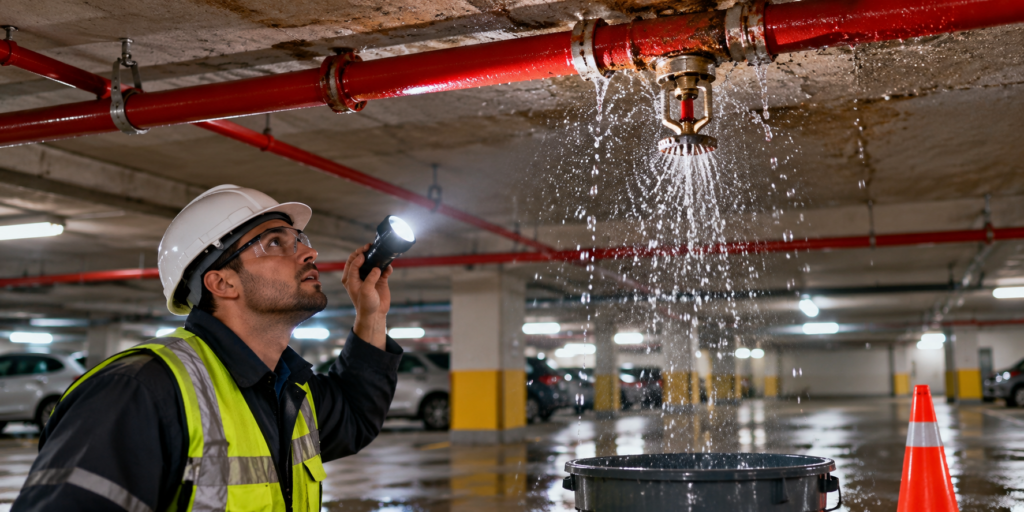
What to Do First When Fire Sprinklers Are Leaking
A fire sprinkler system is a life safety system, so the response needs to be careful as well as fast.
- Contact your licensed fire protection contractor. They can isolate the leaking section and make the repair safely.
- Follow your impairment procedures. If any part of the system has to be shut down, notifications and interim protection measures may be required by your building, insurer, or local authority.
- Protect people and property. Move tenants, equipment, and inventory away from the affected area and contain the water where you can.
- Document what you see. Take photos of the leak, the water, and any damage, and note the location and time.
- Keep any removed pipe or fittings. A cut-out section can show what was happening inside the pipe, and it is useful evidence for a later diagnosis.
Common Causes of Fire Sprinkler Leaks
Not every leak points to a deeper problem. Typical causes include:
- Mechanical damage from impact, vibration, or work being done near the piping.
- Failed fittings, gaskets, or sprinkler heads that have reached the end of their service life or were poorly installed.
- Freezing in areas exposed to cold temperatures.
- Corrosion that thins the pipe wall from the inside until it fails.
A single leak from impact damage or a failed gasket is usually just that. A pattern of leaks is different.
When Repeat Leaks Point to Corrosion
If you are paying for repair after repair, often in the same parts of the building, the leaks are probably symptoms of something happening inside the system. Internal corrosion works quietly for a long time. By the time the first leak appears, the pipe wall may already be thin in other places.
The most aggressive form is microbiologically influenced corrosion, or MIC. Bacteria and other microbes form biofilms on the metal surface and create a corrosive environment that can perforate pipe walls. The result is often small, localized perforations known as pinhole leaks. You can read more in our overview of pinhole leaks in fire sprinkler systems and our explanation of what MIC is.
Signs corrosion may be the cause
- Leaks recurring in the same area or on the same branch lines.
- Dark, discolored, or foul-smelling water when the system is drained or tested. See our guide to black water in fire sprinkler systems.
- Pitting, deposits, or slimy residue on pipe sections that have been cut out.
- Ceiling or wall staining with no clear external water source.
Why Patching Alone Often Fails
A repair fixes the leak you can see. It doesn’t change the conditions that caused it. If microbes, oxygen, and nutrients are still working on the metal, the next weak point is already forming somewhere else in the system.
This is why leak repair costs can add up quickly. Each service call may be affordable on its own, but a series of them adds up to a significant expense without ever getting to the cause.
Be Careful With Flushing
When water looks dirty, flushing the system can seem like the obvious fix. With corrosion problems, it often backfires. Fresh water brings in new oxygen and nutrients, which can revitalize anaerobic bacteria and re-energize their growth. That can lead to more aggressive corrosion rather than less. Before anyone flushes a system with a history of leaks, get the water tested and the piping evaluated.
What a Proper Diagnosis Looks Like
A real diagnosis answers three questions: what is causing the leaks, how widespread is the damage, and what needs to be repaired or replaced. A fire sprinkler corrosion assessment does this with:
- Water quality and chemistry analysis.
- Internal video inspection using a serpentine borescope.
- Ultrasonic pipe wall thickness testing.
- A written report with high-resolution images, root cause identification, and remediation recommendations.
MIC is typically localized. Severe degradation may exist in specific sections while the rest of the system is in better condition. A diagnosis shows where the problem is, so the scope of repair matches the real extent of damage.
What Repeat Leaks Really Cost
Each individual service call can feel manageable. The trouble is the pattern. Repeat visits, after-hours calls, ceiling repairs, and tenant disruption add up over a year or two, and none of that spending moves you closer to a fix. When you add up the full cost, it can rival what a proper diagnosis and targeted repair would have cost from the start.
Keep a Simple Leak Log
Before anyone looks at your system, a basic record makes diagnosis faster and more reliable. For every leak, note:
- The date, the location, and the part of the system affected, such as a branch line, main, fitting, or sprinkler head.
- What failed and how it was repaired.
- Any dark water, odor, or deposits observed.
- The cost of the call and any resulting damage.
A few months of notes can reveal patterns that no single repair report shows, such as the same branch failing repeatedly. Share the log with whoever evaluates the system, and keep it with your other building records.
Questions to Ask Your Contractor
- What do you believe is causing these leaks, and what evidence supports that?
- Has anyone looked inside the piping or tested the water?
- Is the damage localized, or is it system-wide?
- If you recommend replacement, which sections, and why those sections?
- What will prevent this from happening again after the repair?
If the answers are vague, a second opinion from a consultant who doesn’t sell the repair can help. Our page for property owners and managers explains how that works.
Preventing the Next Leak
Once the cause is known and repairs are complete, the goal is to keep conditions inside the system from driving corrosion again. A corrosion control program uses customized treatment, monitoring, and periodic testing to protect the piping, and it can bring predictable maintenance costs in place of surprise service calls. Our services page shows how diagnostics, remediation, and ongoing control fit together.
Frequently Asked Questions
Why are my fire sprinklers leaking?
Leaks can come from mechanical damage, failed fittings or gaskets, freezing, or internal corrosion. When leaks repeat in the same areas, corrosion inside the piping is a likely cause and worth investigating.
What should I do first if fire sprinklers are leaking?
Contact your licensed fire protection contractor, follow your impairment procedures if the system must be shut down, protect people and property, and document the leak with photos. Keep any removed pipe sections for later evaluation.
Does a leaking sprinkler mean I need to replace the whole system?
Not necessarily. MIC is typically localized, so damage is often concentrated in certain sections. An assessment shows how widespread the problem is before replacement decisions are made.
Will flushing the system stop the leaks?
Usually not. Flushing with fresh water can introduce oxygen and nutrients that revive bacteria and speed up corrosion, so testing and a treatment plan are a better approach.
Fire sprinklers leaking again? Corrosolve’s consultants can find out what is happening inside your piping and recommend a scope that matches the facts. Request a fire sprinkler corrosion assessment or call 619.255.9547.