
Fire sprinkler low pressure is a concern every owner and manager should take seriously. A sprinkler system can only protect a building if enough water reaches the sprinklers when they operate, and pressure and flow are what make that possible.
This article walks through the common reasons fire sprinklers don’t have the pressure they should, including a cause that often gets overlooked: corrosion building up inside the piping. It is meant to help you ask better questions, not to replace an evaluation by a qualified fire protection professional.
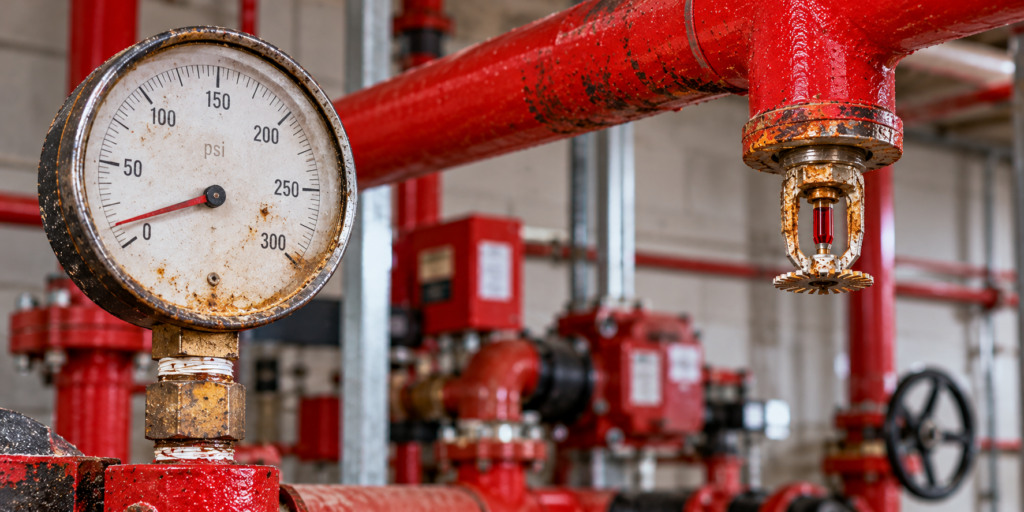
Why Pressure and Flow Matter
A sprinkler system is designed around a specific amount of water delivered at a specific pressure to specific areas. If the supply is weaker than expected, or if something inside the system restricts flow, sprinklers may not discharge as intended. Any suspected pressure or flow deficiency should be reported to your licensed fire protection contractor promptly.
Common Causes of Fire Sprinkler Low Pressure
Supply issues
Water supply pressure can change over time because of changes to the municipal system, nearby construction, or supply-side equipment. A flow test can show whether the available supply still matches what the system was designed around.
Closed or partially closed valves
A valve left partly closed after maintenance or construction can restrict flow to part of a system. Valve supervision and regular inspection help catch this.
Pump or equipment problems
Where a fire pump is part of the system, mechanical or control issues can reduce the pressure delivered to the sprinklers.
Changes to the building
Tenant improvements, added sprinklers, or altered piping can change how a system performs. A system that worked well for its original layout may behave differently after modifications.
Obstructions and buildup inside the pipe
Piping that has been corroding for years can develop internal deposits and rough surfaces that restrict flow. This doesn’t show up on a pressure gauge at the riser, and it isn’t visible from outside the pipe. It is only identified by looking inside.
How Corrosion Can Reduce Flow
Corrosion doesn’t only cause leaks. As it progresses, it can leave deposits and byproducts inside the pipe. Microbiologically influenced corrosion (MIC) forms biofilms on metal surfaces, and active infections continue spreading unless treated. Over time, deposits can narrow the usable inside diameter of the pipe and roughen its surface, which makes it harder for water to move through. You can read more in our overview of what MIC is and how it develops.
Because MIC is typically localized, the restriction may be concentrated in particular sections of the system rather than spread evenly. That is one more reason to locate the problem instead of assuming it is everywhere.
Signs You Should Look Inside the System
- Flow or pressure results that don’t match what the system should deliver, after supply and valve issues have been ruled out.
- Repeat leaks, especially pinhole leaks.
- Dark, discolored, or foul-smelling water. See black water in fire sprinkler systems.
- Debris or deposits at sprinkler heads, drains, or strainers.
- Inspection reports that note internal pipe conditions.
What an Investigation Involves
When the supply and valves check out and low pressure or flow concerns remain, evaluating the interior of the piping is the logical next step. A fire sprinkler corrosion assessment uses video inspection with a serpentine borescope to see internal conditions, ultrasonic testing to measure pipe wall thickness, and water analysis to understand the chemistry driving the problem. The findings are documented in a written report with high-resolution images.
From there, remediation can be targeted. Pipe that is determined to be irreparable is replaced, the system is chemically cleaned, and the water is treated with a corrosion inhibitor solution. Your fire protection contractor and any design professionals involved remain responsible for evaluating hydraulic performance and system compliance.
Why Routine Checks May Not Reveal Internal Corrosion
Routine inspection and maintenance focus on how the system operates: valves, gauges, alarms, and components. Those checks matter, but they generally don’t measure how much metal remains in the pipe wall or what the water chemistry inside the piping looks like. A system can pass routine checks and still have developing internal corrosion.
That gap is why internal evaluation is its own step. It answers questions a gauge reading can’t: how thick is the pipe wall, what is building up inside, and are microbes present and active?
Track Pressure and Flow Over Time
A single reading tells you where you are today. A series of readings tells you where you are heading. If you manage a system with a history of corrosion or leaks, keep a running record:
- Static and residual pressure readings, with dates and conditions.
- Results of any flow tests.
- Locations and dates of leaks and repairs.
- Observations of water color, odor, or debris.
A downward trend, even a gradual one, is worth raising with your contractor before it becomes a failed test. Share the record with whoever evaluates the system, because patterns over time often point to where the problem is concentrated.
Who Is Responsible for What
Evaluating hydraulic performance and system compliance belongs with your licensed fire protection contractor and any design professionals involved. A corrosion consultant’s role is to establish what is happening inside the piping and what is driving it. The two roles work together: the consultant’s findings show where the pipe is compromised, and the contractor and designers decide how the system must perform and how repairs are made.
Preventing Buildup After Repairs
Cleaning and repairing a system doesn’t help for long if the conditions that caused corrosion remain. Two factors are especially important:
- Don’t rely on flushing. Fresh water introduces new oxygen and nutrients, which can revitalize bacteria and re-energize corrosion.
- Control oxygen and microbes over time. Poor or misplaced air release creates high points where oxygen accumulates, and ongoing treatment and monitoring help keep conditions protective.
Our Corrosion Control Program is built for this stage, with customized treatment, monitoring, periodic testing, and annual sampling.
What Owners and Managers Should Do Next
- Report suspected pressure or flow problems to your fire protection contractor right away.
- Rule out supply, valve, and equipment causes.
- If concerns remain or other corrosion signs are present, ask for the internal condition of the piping to be evaluated.
- Get findings in writing, with images and measurements, before approving major work.
Owners and managers who want a neutral, consultant-led view can learn more about how we work on our owners and managers page or see the full process on our services page.
Frequently Asked Questions
What causes fire sprinkler low pressure?
Common causes include changes in water supply, closed or partially closed valves, pump or equipment problems, building modifications, and obstructions or buildup inside the piping, including from corrosion.
Can corrosion cause low pressure in a fire sprinkler system?
It can contribute. Corrosion can leave deposits and rough surfaces inside the pipe that restrict flow. Looking inside the piping is the way to confirm whether this is occurring.
How do I find out what is restricting flow inside my pipes?
An internal inspection with a serpentine borescope, combined with ultrasonic wall thickness testing and water analysis, shows the condition of the piping and identifies where problems are concentrated.
Who should I contact if I suspect a pressure problem?
Contact your licensed fire protection contractor promptly. If supply and valve issues are ruled out and corrosion is suspected, a corrosion assessment can evaluate the interior of the piping.
Concerned about pressure or flow in your system? Corrosolve’s consultants can find out what is happening inside your piping and recommend a scope that matches the facts. Request a fire sprinkler corrosion assessment or call 619.255.9547.