
Few things alarm a property manager like opening a drain or test connection and seeing black, foul-smelling water come out of the fire sprinkler system. Black water in fire sprinkler systems is a common finding, and it is usually a sign that something is going on inside the piping that deserves attention.
This article explains what dark or discolored sprinkler water can mean, why flushing often makes the problem worse, and what to do instead.
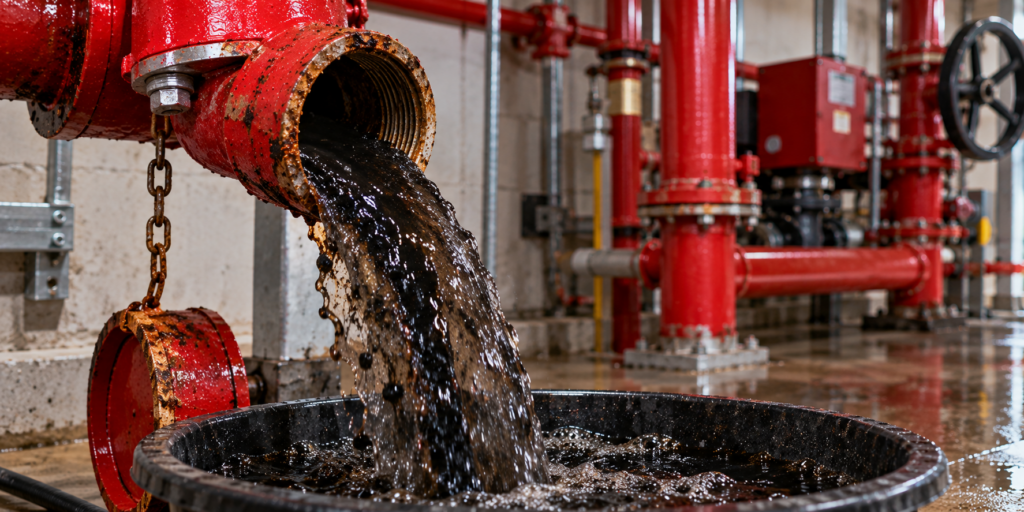
What Black Water in a Sprinkler System Looks Like
Owners and managers typically notice one or more of the following:
- Black, dark gray, or very dark brown water at drains, inspector’s test connections, or main drains.
- A strong, unpleasant odor when water is released.
- Slimy or gritty particles in the water.
- Stained or discolored components after maintenance.
Some people simply call it gross water. Whatever the name, the key question is the same: what is causing it?
What Black Water Can Mean
Brown or orange water often reflects rust particles from ordinary oxygen-driven corrosion. Black, odorous water tends to point somewhere more concerning. It is frequently associated with microbial activity inside stagnant water, particularly microbes that thrive without oxygen. That is the territory of microbiologically influenced corrosion (MIC).
With MIC, bacteria and other microbes form biofilms on metal surfaces. They feed on nutrients in the water and on the pipe metal, creating a corrosive environment. Contributing factors include pH, material defects, nutrients, temperature, low flow, and oxygen levels.
Dark water is not a definitive diagnosis by itself. Other conditions can discolor water too, which is why testing matters. But black water combined with leaks, odor, or deposits is a strong reason to investigate.
Why Flushing Often Backfires
The common response to dirty sprinkler water is to flush the system until it runs clear. It makes sense on the surface, but with microbial corrosion it can make things worse.
Flushing with fresh water introduces new oxygen and nutrients. Those can revitalize anaerobic bacteria and re-energize their growth, leading to more aggressive corrosion. The water may look cleaner for a while, but the underlying infection can be left in place and fed.
Flushing can have a role in some maintenance procedures, but it shouldn’t be your answer to black water without testing and a plan.
Other Factors That Contribute
Poor air release
Inadequate or misplaced air release creates high points where oxygen accumulates. That oxygen accelerates both aerobic bacterial growth and corrosive conditions.
Low flow and stagnant water
Sections of piping with little water movement give microbes more time and stability to colonize. Many sprinkler systems contain water that sits unchanged for long periods.
Changes in water chemistry
Shifts in chemistry that introduce oxygen and nutrients can support bacterial growth in piping that had been stable.
What to Do When You See Black Water
- Don’t ignore it. Dark water is a warning sign, even if the system seems to be working normally.
- Document it. Record where and when you saw it, take photos, and note any odor or particles.
- Avoid flushing as a first response. Wait for testing and guidance.
- Have the water tested. Water analysis helps identify conditions behind the discoloration.
- Look inside the piping. Internal inspection shows whether corrosion or microbial infection is present.
Black Water Compared With Other Discoloration
Color alone isn’t a diagnosis, but it can help frame the questions you ask:
- Brown or orange water. Often rust particles from ordinary oxygen-driven corrosion. Still worth attention if it is persistent.
- Black water with a strong odor. Frequently associated with microbial activity in stagnant, low-oxygen conditions.
- Water that clears quickly after running. May suggest sediment that was sitting at a low point, although corrosion can still be present elsewhere.
- Dark water that returns after flushing. A strong sign that the source hasn’t been addressed.
Why Stagnant Water Is Part of the Story
Many sprinkler systems hold the same water for long periods, because water only moves when it is drained, tested, or discharged. In piping with low flow, microbes have time to settle in and form biofilms. If oxygen and nutrients are introduced, the conditions can change quickly.
That is also why system design matters. Dead ends, low points, and poorly placed air release all affect how water behaves inside the pipe.
What Not to Do
- Don’t repeatedly flush. If the water keeps turning dark after flushing, flushing isn’t solving the problem.
- Don’t treat blindly. Chemical treatment should be based on testing and an understanding of conditions in your system.
- Don’t assume it is cosmetic. Discolored water is a symptom, and symptoms are worth tracing to their source.
- Don’t assume the whole system is bad. Because MIC is typically localized, damage may be limited to certain areas.
How a Corrosion Assessment Helps
A fire sprinkler corrosion assessment goes straight to the evidence. Early detection tools like video scoping with serpentine borescopes help visualize internal pipe conditions and substantiate the extent of infections and potential impairments. Ultrasonic testing measures pipe wall thickness, and water quality analysis looks at the chemistry. The written report documents the findings, identifies the root cause, and recommends a defined scope of work.
Because MIC is typically localized, the assessment often shows that damage is concentrated in particular sections. That helps owners avoid paying for more work than the system needs, which is covered in our article on whether you need to replace your fire sprinkler system.
Cleaning Up and Staying Clean
Remediation typically involves replacing piping that can’t be repaired, chemically cleaning the system, and treating the water with a corrosion inhibitor solution. To keep conditions from deteriorating again, a corrosion control program provides customized treatment, ongoing monitoring, periodic testing, and annual sampling.
If black water is turning up alongside leaks, read our guides on what to do when fire sprinklers are leaking and on pinhole leaks. For a broader view of how we help, see our services page.
When to Act
If the water in your system has turned dark, treat it as a prompt to act now rather than someday. The sooner the cause is identified, the more likely it is that damage can be limited to specific sections, and the more options you have for treatment and repair. Waiting tends to narrow those options, particularly if an active infection is left to spread. Pressure and flow concerns are worth reporting at the same time, so read our article on fire sprinkler low pressure as well.
Frequently Asked Questions
Why is my fire sprinkler water black?
Black, odorous water is often associated with microbial activity in stagnant water and can be a sign of microbiologically influenced corrosion. Other causes are possible, so water testing and an internal inspection are the way to confirm.
Is black water in a fire sprinkler system dangerous?
It is a warning sign that corrosion or microbial activity may be present, which can lead to leaks and system impairment. Treat it as a reason to investigate rather than something to ignore.
Should I flush my fire sprinkler system if the water is black?
Usually not as a first step. Fresh water adds oxygen and nutrients that can revive anaerobic bacteria and accelerate corrosion. Get the water tested and the piping evaluated first.
How do I find the cause of discolored sprinkler water?
A corrosion assessment combines water quality analysis, internal video inspection with a serpentine borescope, and ultrasonic wall thickness testing to identify the cause and the extent of damage.
Seeing black or discolored water in your sprinkler system? Corrosolve’s consultants can find out what is happening inside your piping and recommend a scope that matches the facts. Request a fire sprinkler corrosion assessment or call 619.255.9547.